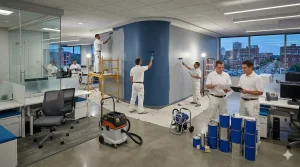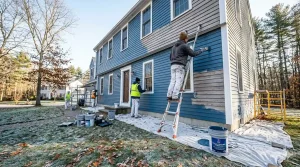

Choosing the Right Commercial Painting Contractor for Your Business Assets in 2026

When you manage a commercial property, the aesthetic appeal and structural integrity of your facility are direct reflections of your professional standards. Whether you are overseeing a retail storefront in Nashua, NH, or a sprawling corporate office in Waltham, MA, the stakes are significantly higher than a standard residential project.
Commercial environments demand durability, specialized coatings, and, most importantly, a contractor who operates with full legal and financial protections.
Hiring a commercial painting contractor is not just about choosing a color palette, it is about risk management and long-term asset protection. As we move into 2026, the industry has evolved with stricter safety protocols and more advanced material science.
A licensed and insured professional ensures that your project is completed without legal headaches, safety lapses, or unexpected financial liabilities that could arise from amateur mistakes.
Navigating the sea of local contractors requires a keen eye for specific credentials. You need a partner who understands the nuances of high-traffic durability, specialized surface preparation, and the logistical coordination required to paint a business without halting operations. This guide breaks down exactly what you should verify before signing a contract to ensure your commercial investment is in expert hands.
The Vital Importance of Licensing for Commercial Painting Projects
A valid state license is the first line of defense for any business owner. In the world of commercial painting, a license is more than just a piece of paper, it is proof that the contractor has met the minimum competency requirements set by the state. It signifies that they understand building codes, local regulations, and the ethical standards expected of a professional painting contractor.
When a contractor is licensed, they are searchable in state databases, providing a level of transparency that “unregulated” workers simply cannot offer. This credential confirms that the business is a legitimate entity, registered to perform work within specific jurisdictions such as New Hampshire or Massachusetts.
For commercial entities, using an unlicensed worker can lead to fines and complications with local building departments.
Beyond legal compliance, a license suggests a commitment to the trade. It shows that the team at Marco’s Painting and similar high-caliber outfits have invested the time and resources to formalize their expertise. In 2026, where digital footprints are everywhere, verifying a license is a quick step that saves you from the catastrophic “no-show” or “half-finished” project scenarios.
Verifying State-Specific Credentials in NH and MA
Different states have varying requirements for contractors. For instance, while New Hampshire might have specific registration rules for business entities, Massachusetts has its own set of Home Improvement Contractor (HIC) and Construction Supervisor Licenses (CSL) depending on the scope of work. A true commercial painting specialist will be well-versed in these regional distinctions.
Always ask for the license number upfront. A professional will have this information readily available on their website, business cards, and official estimates. If a contractor hesitates or claims they “work under a partner’s license,” consider it a significant red flag. Your business deserves a direct relationship with a fully vetted professional.
Compliance with Lead-Safe Practices and OSHA Standards
Commercial buildings, especially historic ones found in downtown Manchester or Portsmouth, may contain legacy materials that require careful handling.
A licensed contractor is far more likely to be trained in EPA Lead-Safe RRP (Renovation, Repair, and Painting) practices. This is crucial for maintaining the safety of your employees and customers during the renovation process.
Furthermore, OSHA compliance is a non-negotiable aspect of commercial work. High-rise exterior painting or warehouse ceiling coatings involve ladders, scaffolding, and lifts. A licensed professional ensures their crew follows strict fall protection and chemical safety guidelines, preventing workplace accidents that could otherwise become your legal nightmare.
Comprehensive Insurance: Protecting Your Bottom Line
Insurance is the bedrock of professional commercial painting. While many small-scale painters might carry basic “handyman” insurance, a true commercial partner carries robust policies designed to cover the unique risks of business environments.
Without these protections, any accident on your property, whether it is a slip-and-fall or accidental property damage, could lead to a lawsuit against your company.
There are two primary types of insurance you must verify: General Liability and Workers’ Compensation. General Liability covers damage to your property or injuries to third parties.
If a painter accidentally spills high-grade epoxy on your expensive showroom floor, this insurance pays for the restoration. Workers’ Compensation is equally critical, as it covers the painters themselves if they are injured while working on your site.
Why General Liability Limits Matter for Businesses
For commercial projects, a standard $500,000 policy is often insufficient. Most property managers and business owners in 2026 look for contractors with at least $1,000,000 to $2,000,000 in General Liability coverage. This ensures that even in the event of a major incident, the insurance pool is deep enough to cover all damages without the contractor going bankrupt or the liability shifting to you.
| Insurance Type | Minimum Recommended Coverage (2026) | What it Specifically Protects |
| General Liability | $1M – $2M | Property damage, third-party injuries, and completed operations. |
| Workers’ Comp | State Statutory Limits | Medical bills and lost wages for injured painters on your site. |
| Umbrella Policy | $5M+ (For large scale) | Additional layer of protection for high-value commercial assets. |
| Commercial Auto | $1M | Protects against accidents involving the contractor’s fleet on your property. |
The Danger of “Ghost Policies” in the Painting Industry
In the contracting world, some unscrupulous actors purchase a “ghost policy” just to get an insurance certificate, only to cancel it immediately after. To protect yourself, do not just accept a photocopy of an insurance document. Request a Certificate of Insurance (COI) sent directly from the contractor’s insurance agent to your email.
This direct communication ensures the policy is active and allows you to be named as an “Additionally Insured” entity for the duration of the project. This is a standard practice for professional painting contractors working with commercial clients. It provides you with a direct line of protection and peace of mind that the coverage is legitimate.
Specialized Expertise in Commercial Surface Preparation
A house painter and a commercial painting contractor use very different skill sets. Commercial surfaces often involve materials rarely seen in residential settings, such as tilt-up concrete, corrugated metal, galvanized steel, and high-performance plastics. The longevity of a commercial paint job is 90% dependent on the preparation of these specific substrates.
Professional contractors use advanced diagnostic tools to check for moisture levels, pH balance in new concrete, and previous coating adhesion. If these steps are skipped, even the most expensive paint will peel within a year.
In 2026, we utilize dustless sanding systems and specialized degreasers to ensure that the environment remains clean and the bond between the surface and the coating is permanent.
Industrial Coatings and High-Performance Finishes
In high-traffic areas like hospitals, schools, or retail centers, standard latex paint will not suffice. You need a contractor who is experienced with Scuff-resistant coatings, Epoxy floor systems, and Low-VOC (Volatile Organic Compound) paints that allow for quick re-occupancy. Understanding the chemical makeup of these products is vital for a successful outcome.
Marco’s Painting focuses on selecting the right finish for the right environment. For example, a commercial kitchen requires antimicrobial coatings that can withstand frequent power washing and chemical sanitizers, while a corporate office might prioritize aesthetic depth and sound-dampening “thick-build” paints.
Project Management and Communication Protocols
One of the biggest complaints in the construction industry is poor communication. For a business, a delay in a painting project can mean a delay in reopening, leading to lost revenue.
A professional commercial painter acts as a project manager, providing clear timelines, daily progress reports, and a dedicated point of contact.
In 2026, top-tier contractors use project management software to share real-time updates and photos with clients. This level of transparency ensures that everyone is on the same page regarding the 5w2h of the project: what is being done, why it is being done that way, who is doing it, where they are working, when they will finish, how they are executing the task, and how much of the budget is being utilized.
Minimizing Business Disruption Through Flexible Scheduling
A key trait of a dedicated commercial painting contractor is their willingness to work around your schedule. This often means “third-shift” painting, where the crew works overnight or on weekends so your business remains operational during the day. This flexibility is essential for retail spaces, medical facilities, and 24/7 industrial plants.
Proper planning includes cordoning off work areas, using air scrubbers to manage odors, and ensuring that all pathways are clear of equipment before your staff arrives in the morning. This logistical dance is what separates the pros from the amateurs. You are not just paying for paint on a wall, you are paying for a seamless integration into your business cycle.
Evaluating Professional Portfolios and Verifiable References
A contractor’s past performance is the best indicator of their future results. When vetting a painting contractor for a commercial bid, ask for a portfolio that includes projects of a similar scale and complexity to yours. If you have a 50,000-square-foot warehouse, a portfolio full of bedroom repaints is a sign to look elsewhere.
Check for references from other local business owners or property managers in the New Hampshire and Massachusetts areas. Ask these references specifically about the contractor’s ability to hit deadlines, their cleanliness on the job site, and how they handled any unexpected challenges. A reputable company will be proud to share their track record of success.
The Value of a Detailed, Written Proposal
Generic estimates like “Paint exterior – $10,000” are a recipe for disaster. A professional commercial proposal should be a multi-page document detailing every aspect of the job. This includes the specific brands and lines of paint to be used, the number of coats, the exact preparation methods (pressure washing, scraping, priming), and a clear warranty statement.
A detailed bid protects both parties. It ensures that you are getting exactly what you paid for and prevents “scope creep” where the contractor tries to charge for extras that should have been included. In 2026, look for digital estimates that allow for easy adjustments and electronic signatures, streamlining the administrative side of your facility management.
Local Service Areas for Marco’s Painting Commercial Services
Choosing a contractor with a strong local presence ensures they are familiar with the regional climate challenges and have a local crew ready to respond to your needs. Marco’s Painting provides expert commercial services across the following regions:
Main service areas for Marco’s Painting commercial painting:
Long-Term Value and Warranty: Beyond the Final Coat
A commercial paint job is an investment that should last five to ten years, depending on the exposure and usage. A contractor who offers a solid labor and material warranty shows they have confidence in their craftsmanship. Be sure to understand the difference between the manufacturer’s warranty on the paint and the contractor’s warranty on the application.
A licensed and insured professional will stand by their work. If the paint starts to bubble or flake prematurely due to improper preparation, a reputable contractor will return to fix the issue at no additional cost. This commitment to quality is what builds long-term partnerships between businesses and their service providers.
Sustainable and Eco-Friendly Commercial Painting Options
In 2026, many commercial enterprises are prioritizing LEED certification and environmental sustainability. Asking your contractor about Low-VOC and Zero-VOC options is not just good for the planet, it is good for your indoor air quality. These paints have minimal odor, meaning your office or store can return to normal operations much faster without the “new paint” smell causing headaches for sensitive individuals.
Sustainable practices also include the proper disposal of old paint and cleaning solvents. A professional company has established protocols for hazardous waste management, ensuring that your business remains compliant with local environmental laws. This attention to detail reflects the overall professionalism of the company you choose to hire.
Summary for Quick Insights
Licensing: Always verify a current state license to ensure legal compliance and professional accountability.
Insurance: Require a COI with at least $1M in General Liability and full Workers’ Comp coverage.
Preparation: Commercial jobs fail without expert surface prep, specifically for concrete, metal, and industrial substrates.
Scheduling: Look for contractors who offer overnight or weekend shifts to minimize business downtime.
Specialization: Ensure the contractor uses high-performance coatings like epoxy or scuff-resistant finishes for high-traffic areas.
Transparency: A detailed written proposal is mandatory to avoid hidden costs and clarify the scope of work.
Ready to Elevate Your Commercial Property?
Finding a commercial painting contractor you can trust shouldn’t be a stressful process. By focusing on licensing, insurance, and technical expertise, you can ensure your project is a success from the first drop of primer to the final inspection. At Marco’s Painting, we pride ourselves on being the preferred partner for businesses throughout New Hampshire and Massachusetts, delivering high-durability finishes with professional precision.
If you are ready to discuss your upcoming project or need a comprehensive walk-through of your facility, our team is here to help. We understand the specific needs of commercial clients and are equipped to handle projects of any scale while maintaining the highest safety and quality standards in the industry.
Don’t leave your business’s first impression to chance. Contact the experts who prioritize your protection and your property’s value.
Get in touch with us today for a professional consultation!
Visit our Contact Us page to request a detailed quote.